Product Gallery
PRODUCT VIDEO Watch product in real industrial use
Working Video

Product Gallery
PRODUCT VIDEO Watch product in real industrial use
Industrial surface preparation application use-case.
Industrial surface preparation application use-case.
Industrial surface preparation application use-case.
Industrial surface preparation application use-case.
Industrial surface preparation application use-case.
Industrial surface preparation application use-case.
Product Overview
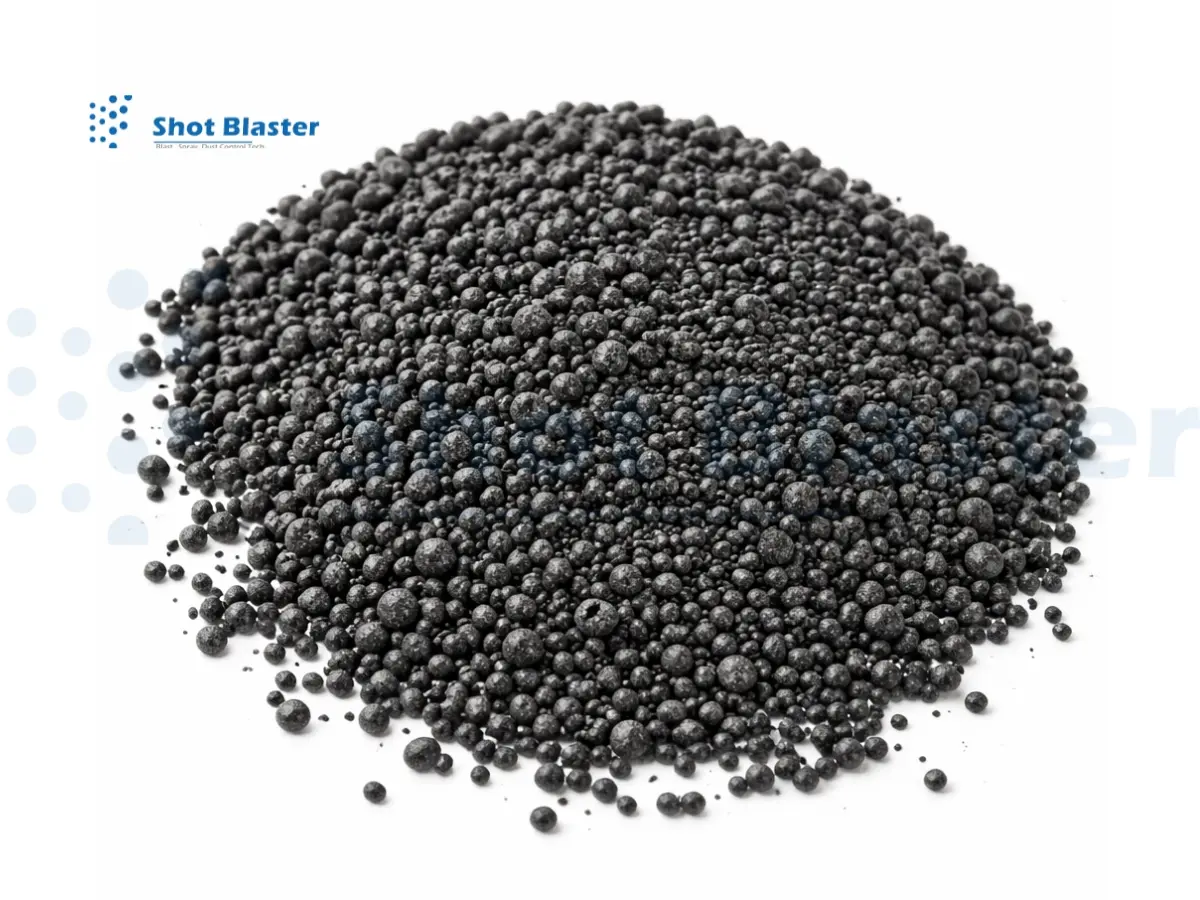
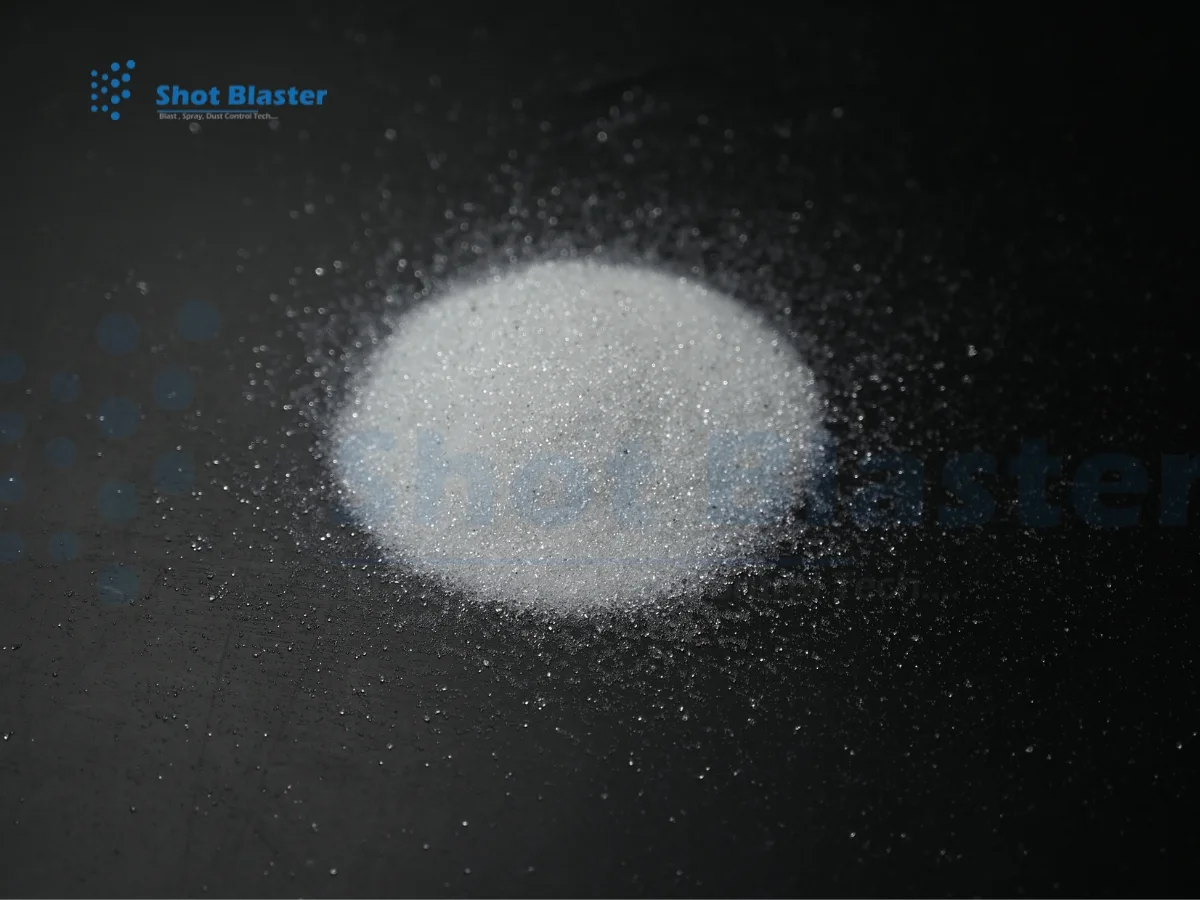
Glass beads are a well-known blasting media for cleaning, conditioning, and peening metallic surfaces employing pressure induction, suction, and wet blasting principles. Glass Bead is made from high-quality crushed and sized glass cullet that is melted into a spherical shape and annealed for uniform and controlled internal stresses as well as enhanced fracture resistance. These non-abrasive transparent spheres perform without causing any damage or dimensional changes to the object's surface during embedment, contamination, or pick-up. Beads deliver desired surface finish and texture from fine matte to bright satin depending on size and operating settings. We have the best glass bead price compared to other manufacturers in India.
Masking stencils and blasting exposed surfaces with glass beads are used to create decorative and unusual effects. Because of the inherent quality of glass beads, critical tolerance products, dies, molds, components, and so on can be cleaned, deburred, and textured without losing any base metal, guaranteeing the sanctity of the critical tolerances. Furthermore, because of the inherent robustness of glass beads, they can withstand several impacts, making them ideal for use in closed-cycle blasting equipment with recycling capabilities. Glass Beads do not leave any undesirable or ferrous residue on blasted surfaces because they are chemically inert and nontoxic. Spending media that has not been tainted is not harmful to the environment.
In general, the higher the pressure, the bigger the impact and the faster you can blast. It can, however, cause modifications to the surface of your goods. Pressure blasting is faster than suction blasting, but it can also cause surface alterations (if blast time or pressure is not well controlled). It's always a good idea to start with a low blast pressure and gradually increase it until you find the one that's right for you. Glass bead blasting requires a maximum blast pressure of 80 psi for suction blast cabinets and up to 40 psi for pressure blasting.
When compared to other blast media, glass beads are rather safe. Glass bead blast media, for example, can be a good alternative to silica sand depending on your application. While silica sand is still legal, it is becoming more regulated as a source of a range of health issues, including silicosis. This comprehensive guide about silica sand and sand blasting may be found here. Glass bead blasting also has the advantage of being able to clean a surface for several cycles before needing to be replaced. Glass bead media typically lasts 4–6 cycles before needing to be changed. Finally, glass beads can be employed in a suction or pressure blast cabinet.
Knowing the advantages of glass beads, it's also useful to be aware of the most popular applications for glass bead blasting. Glass bead blasting works effectively in sandblast cabinets because the blast material can be recovered. It cleans a surface effectively without leaving much of a blast profile. This makes it great for removing rust as well as cleaning paint or coatings from a part. If a profile is desired, steel grit or aluminum oxide may be necessary, as glass beads do not normally profile when blasting.
Because glass beads are supposed to be reused, special equipment is required. In a sand blasting cabinet, glass beads are commonly used. It performs nicely in a suction feed sandblast cabinet because it is not a particularly heavy blast medium. Although it is uncommon to use glass beads with a basic sandblast pot, you can smash the glass with a standard sandblast pot.
While glass bead blast media is available in a number of mesh sizes ranging from 40 to 325 mesh, some mesh sizes are more frequent. Glass bead blasting mesh sizes include 50-70, 60-80, 70-100, and 120-200. A 60-100 mesh glass bead is often the fastest cleaning glass bead. The optimal blast media size will eventually be determined by your specific application.
Chemical Composition
| Sio2 | 72% |
| Na2O | 13% |
| CaO | 5% |
| MgO | 4% |
| K2O | 3% |
| Al2O3 | 1% |
But, a number of programs are carried out through the use of glass beads but floor education is the primary application of glass beads. At some stage in the Shot Blasting Machine process, glass beads are blanketed on the steel floor with high velocity. It will also be used for peening, burr elimination, and surface remedy.
Blast Rooms are a Manufacturer, & Supplier of Glass Beads at a low price in India. We also provide Shot Blasting Machine, Grit Blasting Machine, Thermal Spray Gun, Sand Blasting Cabinet, Shot Blasting Room, Metalizing Gun, etc.
Get quick answers to common technical and commercial questions before selecting the right glass beads configuration.
These FAQs help engineering and procurement teams evaluate process fit, operating requirements, and long-term support clarity.
Steel shots are typically harder and more durable than other types of blast media, such as glass beads or plastic media. This makes them more effective at removing tough surface contaminants, such as rust and mill scale. Steel shots can also be reused many times before needing to be replaced, making them a cost-effective option.
Steel shots are small, spherical particles of steel that are used for shot blasting and peening applications. They are typically made by melting scrap steel and forming it into a spherical shape through a process called atomization.
The two most prevalent forms of metallic abrasives are steel shot and steel grit. Because of its spherical form, steel shot will give the substrate's surface a smooth texture. The substrate surface will be etched and worn down by the randomly angular steel grit.
Share your requirement and get a technical-commercial proposal tailored to your process, capacity, and site setup.